How to Use AI for Marketing and Growth
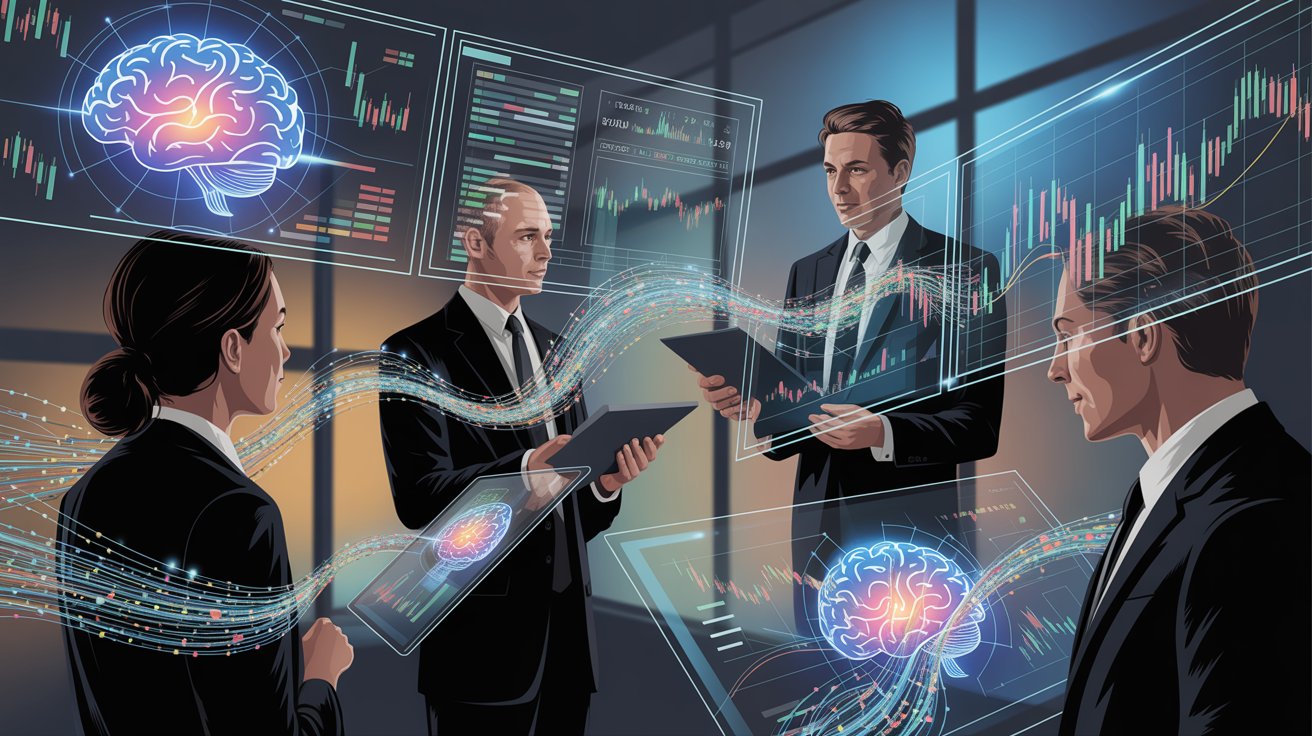
In the fast‑evolving world of digital business, understanding how to use AI for marketing and growth is no longer a nice‑to‑have—it’s becoming a strategic imperative. Whether you’re a small startup in India or a global brand, leveraging artificial intelligence (AI) in your marketing efforts can unlock new levels of efficiency, personalization, and growth. This blog post will explore exactly how to harness AI for marketing and growth, step by step: covering the “why”, the “what”, the “how”, real‑world examples, common pitfalls, and a roadmap you can follow right now. Throughout the post you’ll find key SEO‑based keywords such as AI marketing strategy, marketing automation with AI, AI‑driven growth, AI for customer personalization, AI in digital marketing, and others naturally integrated to help this article rank as well as deliver real value.
1. Why AI for Marketing and Growth Matters
1.1 From Manual to Scalable
Marketing used to be largely manual—creating campaigns, selecting segments, writing copy, building visuals, optimizing ads, and monitoring results. With AI, many of these tasks become faster, more data‑driven, and scalable. For example, machines can analyse huge volumes of customer data, spot patterns, personalise content, and even generate variants of creative assets. According to Gartner, generative AI is “transforming marketing, enabling brands to augment, accelerate, and create new content while reshaping how marketing operates.”
1.2 Personalisation At Scale
One of the strongest benefits of an AI marketing strategy is personalisation at scale. AI allows marketers to deliver content, offers and experiences tailored to individuals or micro‑segments rather than mass audiences. For example, AI can analyse past behaviour, demographics, context, intent and deliver the right message at the right time. As IBM points out:
“AI technologies are being used more widely to generate content, increase team efficiency, improve customer experiences and deliver more accurate results.”
1.3 Data‑Driven Growth
When you deploy AI in marketing, you move from gut‑feel decisions to data‑driven insights. For instance, a recent survey by McKinsey & Company found that revenue increases from AI are most commonly reported in marketing and sales and that high‑performing organisations redesign workflows and scale AI beyond pilot phase.
1.4 Competitive Advantage
In a crowded marketplace, using AI for growth gives you an edge—faster insights, more efficient campaigns, better customer experience, improved ROI. According to a report from Adobe Inc., “In 2025, AI and predictive analytics are redefining how marketers drive growth, enabling deeply tailored strategies that anticipate customer needs and deliver measurable business results.”
2. What Does AI Marketing Really Involve?
To utilise AI for marketing and growth effectively, it's helpful to understand the major components of AI‑driven marketing. Here are the key areas and how they fit.
2.1 Marketing Automation with AI
This includes using AI tools to automate repetitive tasks such as email marketing, social media posting, ad campaign setup and optimisation, chatbots for customer engagement, and more. Automation frees human marketers to focus on strategy and creativity.
2.2 Customer Analytics & Predictive Models
AI systems can ingest huge amounts of customer data (behavioural data, purchase history, demographic data, social data) and use machine learning to build predictive models—identifying which customers are likely to convert, churn, or respond best to an offer. This is one of the core pieces of an AI‑driven growth strategy.
2.3 Generative Content & Creative AI
Beyond analysis, AI is now generating content: from ad copy and subject lines to visuals and personalised creatives. Generative AI enables brands to “augment, accelerate, and create new content” and “drive creativity and personalized experiences”.
2.4 Personalisation & Customer Experience
Marketing today is less about “broadcast” and more about one‑to‑one relationships. AI helps personalise experiences, recommendations, messages, offers, timing, channel selection. For example, customising landing pages, email bodies or ads based on inferred intent and context. Improved customer relationship management (CRM) capabilities via AI are increasingly common.
2.5 Operational Efficiency & Real‑Time Decisioning
AI helps marketers answer questions like: “Which campaign is performing best right now?” or “Which segment should we target next?” It speeds up decision making, often in real time. Performance data is fed back through algorithmic models and budgets, bids and creatives adjust automatically.
2.6 Governance, Ethics & Data Quality
Any credible AI in marketing strategy must consider data quality, ethics (avoiding bias), transparency, governance and brand safety. AI won’t regulate itself and human oversight remains critical.
3. How to Build an AI Marketing Strategy for Growth
Here is a practical roadmap—broken into phases—to employ AI for marketing and growth within your organisation (whether you are a startup, mid‑size business or working independently). The steps are tailored so you can implement them even with a modest budget.
Phase 1: Prepare the Groundwork
3.1 Define clear growth objectives and marketing KPIs
- What growth do you want? (e.g., 30 % increase in leads, 20 % better conversion rate, 15 % more repeat purchases)
- Align your AI marketing strategy with business goals and marketing KPIs (eg. cost per acquisition, churn rate, average order value).
3.2 Audit your current data and systems
- Catalogue what data you have: customer interactions, email responses, web analytics, CRM records, purchase history.
- Ensure data quality, proper tagging, consistent schema.
- Identify gaps that AI would need filled (eg. missing attributes, incomplete tracking, poor segmentation).
3.3 Build or adopt the right tools
- Choose AI/ML platforms, marketing automation tools, predictive analytics tools.
- You don’t need to build everything from scratch; many tools offer AI features today. For instance, you might use AI‑powered content generation, chatbots, or ad optimisation tools.
- Ensure that marketing and IT collaborate: the tool stack must align with data architecture and brand governance.
3.4 Create an AI governance framework
- Define who owns what: data ownership, model oversight, creative review, ethical guidelines.
- Set rules on how AI will be used for customer experience, personalization, segmentation.
- Ensure transparency, avoid “AI washing” (i.e., claiming AI capabilities where there are none) and monitor for bias or unintended effects.
Phase 2: Pilot Use Cases
3.5 Select high‑impact, low‑complexity use cases
You may begin with one or two focused applications, such as:
- Use AI to optimise email subject lines and send times (marketing automation with AI).
- Employ AI for dynamic ad creative testing and optimisation.
- Apply predictive modelling to identify high‑value leads or churn‑at‑risk customers.
- Use a chatbot with AI to improve customer engagement and service, freeing human agents for complex issues.
3.6 Develop the pilot, measure and iterate
- Run the pilot for a fixed period (say 8‑12 weeks) with clear metrics (improvement in open rate, conversion, cost reduction).
- Use this time to refine: adjust models, refine datasets, build proper feedback loops.
- Document lessons learned, and validate ROI before scaling.
3.7 Expand and scale
Once the pilot shows success, expand the use cases more broadly:
- Move from one channel (say email) to others (social media, display ads, landing pages, chat).
- Increase the volume of personalization.
- Leverage deeper AI models (for example, generative content, multimodal inputs like images+text).
Phase 3: Optimise & Institutionalise
3.8 Continuous improvement and AI‑driven optimisation
- Institute dashboards that feed AI insights into marketing operations: what’s working, what’s not, where to shift budget.
- Use AI to optimise bids, creatives, channel mix, segmentation in real‑time.
- Focus on measurement: attribute growth to AI‑enabled marketing, prove causality where possible.
3.9 Culture, skills and change management
- Invest in training your marketing team in AI‑tools, prompt‑engineering, data analytics. Many companies report that they adopt AI, but the human skill gap remains.
- Encourage a mindset shift: from “we wait for reports” to “we optimise live with AI”.
- Celebrate wins and share across the organization to build momentum.
3.10 Ethics, transparency and brand trust
- Monitor for bias in your AI‑driven marketing: e.g., are certain customer groups being underserved or mis‑targeted?
- Be transparent with customers (where appropriate) about use of AI in personalisation or automation.
- Ensure your data practices, privacy compliance, customer consent and brand values align with your AI strategy.
4. Real‑World Applications: How Brands Are Using AI for Growth
Let’s look at concrete examples of how companies are applying AI for marketing and growth.
Example 1: Automated Visual Creative + Cost Reduction
Klarna, a fintech company, used generative AI tools (such as image‑generation models) to massively reduce their marketing costs:
- They cut image‑production costs by millions by creating tailored visuals for campaigns rather than traditional photo‑shoots.
- The image development cycle went from six weeks to seven days.
- This freed resources for more campaigns and improved timeliness.
Example 2: Content Creation + Personalisation
A typical marketing team today uses AI for generating email copy, subject lines, social‑media captions, variations of ad copy and landing page content. Many marketers are using AI for copywriting in email marketing, organic search and social media.
Example 3: Insights‑Driven Targeting & Growth
The greatest revenue benefits from AI are reported in marketing and sales functions—especially when organisations redesign workflows, scale AI beyond pilot phase and align leadership with AI strategy.
These examples illustrate that AI for marketing and growth is real, measurable and increasingly accessible.
5. Key Tactics You Can Apply Right Now
Here are tactical ideas you can implement immediately (or very soon) to leverage AI in your marketing and growth efforts—even with limited budget.
5.1 Use AI‑powered Content Generation
- Use generative AI tools to help write blog posts, social‑media captions, ad copy, email subject lines.
- Experiment with A/B testing: have AI produce 2‑3 variations of copy and test which works best.
- For instance, you could create personalised email variants for different segments with AI.
- Use the keyword AI content marketing to drive your strategy and SEO emphasis.
5.2 Use Predictive Analytics for Segmentation & Targeting
- Segment customers based on behaviour, demographics, engagement using AI clustering or predictive scores.
- Identify your “likely to convert” leads using AI scoring and focus your growth efforts there—this is part of an AI‑driven growth strategy.
- Use the keyword AI customer segmentation when you optimise your website/articles.
5.3 Automate Ad Optimisation & Bidding
- Use advertising platforms that integrate AI to optimise bidding, ad placement, channel mix.
- Use dynamic creative optimisation: AI picks the best visuals, copy, audience combination.
- The keyword AI ad optimisation is relevant if you write blog posts or website content on this.
5.4 Personalisation Across Channels
- Use AI to personalise landing pages, email content, product recommendations, exit‑intent popups, chat messages.
- For example: If a returning visitor previously browsed “blue running shoes”, show them tailored offers when they visit again.
- Use the keyword AI personalisation marketing in your content strategy.
5.5 Chatbots and Conversational AI
- Deploy AI chatbots on your website or app to engage visitors, answer FAQs, qualify leads, book appointments, escalate to humans when needed.
- This supports growth by improving conversion rates, reducing friction, improving user experience.
- Use the keyword AI chatbot marketing in your blog and content assets.
5.6 Content & Audience Insights
- Use AI to analyse your social media comments, customer reviews, survey responses to extract themes, sentiment, topics.
- For instance: What sentiment do users express about your brand? What emerging topics/questions keep coming up?
- Use the keyword AI sentiment analysis marketing.
5.7 Experimentation & Multimodal AI
- A major trend is multimodality – AIs that understand text, image, audio, video together.
- You could experiment with AI‑generated video snippets, voiceover content, image generation for social posts, etc.
- Use the keyword multimodal AI marketing for advanced content pieces.
5.8 Measure, Learn & Scale
- Track which tactics produce growth: incremental leads, conversions, cost savings, revenue uplift.
- Use AI‑driven dashboards to monitor performance and feed the insights back into your campaigns.
- Use the keyword AI marketing dashboard or AI marketing ROI in your SEO content.
6. Pitfalls & Challenges to Be Aware Of
In your journey to using AI for marketing and growth, you must be aware of possible pitfalls and how to avoid them.
6.1 Data Quality and Integration
Even the best AI model won’t work well if your data is fragmented, inconsistent or incomplete. Ensure you have good‑quality data, unified across channels, properly tagged and governed.
6.2 Over‑hyped Expectations (“AI Washing”)
Be wary of jumping into AI projects without strategy or measurable objectives. The term AI washing refers to overstating what AI can do. Ensure that your AI marketing strategy is grounded in business impact, not just buzzwords.
6.3 Lack of Skills and Change Management
Many organisations adopt AI tools, but fail to train their team to use them effectively. The gap between adoption and meaningful use persists. Ensure your marketers are comfortable with AI prompts, workflow integration, and analytics.
6.4 Ethical, Privacy & Bias Concerns
Personalisation works best when it’s done responsibly. Models might inadvertently discriminate or deliver biased messaging. Define oversight mechanisms, transparency protocols and customer consent frameworks.
6.5 Not Scaling Beyond Pilots
AI in marketing often starts with grand ambition, but many organisations stop at pilot and fail to scale. Your roadmap must include scaling once pilots succeed.
6.6 Brand Voice & Authentic Storytelling
AI can generate content at scale, but it may lack nuance, brand personality or emotional resonance. Make sure your brand voice remains authentic. Even as AI grows, human talent remains vital.
7. Building an AI‑First Growth Marketing Plan: Step‑by‑Step
Here is a structured plan you can adapt. It’s especially useful if you’re working from India (or any market) with modest resources and want to implement smartly.
Step 1: Set Your Growth Marketing Objectives
- Example: Increase monthly qualified leads by 40 % in the next 6 months.
- Example: Improve conversion rate by 15 % within 90 days.
- Example: Decrease cost per acquisition (CPA) by 20 %.
Step 2: Analyse Current State
- Audit data streams: website analytics, CRM, email systems, ad platforms.
- Map out customer journey: how people find you, how they engage, purchase, churn.
- Identify gaps: eg. missing tracking, no unified customer view, generic messaging.
Step 3: Define Priority AI Use Cases
Pick 2‑3 use cases based on impact vs complexity matrix:
- Low complexity / high impact: AI email subject line optimisation, AI ad creative testing.
- Medium complexity: AI predictive lead scoring, AI personalised landing pages.
- Advanced: Multimodal AI content generation (video + image + text) for new acquisition channels.
Step 4: Choose Tools & Platform
- Evaluate marketing automation platforms with built‑in AI.
- Consider standalone AI tools for copywriting, image generation, chatbots, predictive analytics.
- Ensure integrations with existing systems (CRM, analytics tools, ad platforms).
Step 5: Implement Pilot
- Define key metrics (open rate, click‑through rate, conversion rate, cost per lead).
- Build and launch pilot campaigns. For example, AI‑generated subject lines vs human‑written; personalised ad creatives vs generic.
- Monitor performance continuously and refine.
Step 6: Evaluate & Document
- Compare outcome vs baseline: Did AI intervention deliver better results?
- Document lessons: what worked, what didn’t, what adjustments were made.
- Validate ROI: for example, reduction in cost, increase in conversions, uplift in engagement.
Step 7: Scale & Institutionalise
- Expand successful use cases to other marketing channels.
- Build standardised processes for using AI: prompt libraries, creative templates, workflow integration, governance.
- Train your team in AI‑related skills and culture: prompt engineering, data interpretation, AI tool usage.
- Monitor and refine: set up dashboards for ongoing optimisation and growth.
Step 8: Continuous Improvement & Innovation
- Explore next‑level applications: multimodal AI, voice search optimisation, virtual assistants, AI for customer journey mapping.
- Keep aligned with trends: “multimodality”, “retrieval‑augmented generation” (RAG), and “AI governance”.
- Keep the customer experience central: AI is a tool, but emotion, storytelling and authenticity remain key in growth marketing.
8. SEO & Content Strategy for AI Marketing Growth
Since part of your goal is to monetise via Google Ads and to build organic traffic, here are practical tips for aligning your AI marketing and growth efforts with SEO and content.
8.1 Use Targeted Keywords Naturally
In your blog posts, web pages, landing pages, include keywords such as:
- AI for marketing and growth
- AI marketing strategy
- Marketing automation with AI
- AI‑driven growth marketing
- AI personalisation marketing
- AI marketing tools
- AI content marketing
- Marketing growth hacks with AI
8.2 Create High‑Quality, Long‑Form Content
Google favours content that is helpful, deep, original and well‑structured. A 3,000+ word blog like this is a good start. Use subheadings, bullet lists, examples, visuals (images or charts), internal links to other blog posts, external links to authoritative sources.
8.3 Answer User Intent
When someone searches for “how to use AI for marketing growth” they likely want actionable guidance, examples, tools, pitfalls. Ensure your content addresses those queries directly—preface with what is it, why it matters, how to do it, etc.
8.4 Use Structured Data & Schema
If possible implement schema markup (Article schema, FAQ schema) to help Google understand your content and possibly serve rich results.
8.5 Optimise for User Engagement
Long dwell time, low bounce rate, high scroll depth help SEO. Use engaging visuals, interactive elements, case studies, examples. Make sure your blog is mobile‑friendly, fast loading, easy to read.
8.6 Promote and Build Backlinks
Share your content on social media, relevant communities, LinkedIn, forums, email newsletters. Guest‑blog, collaborate with influencers in marketing tech and AI to build credible backlinks. Use keywords like AI growth marketing blog, AI marketing trends 2025 for outreach.
8.7 Monitor Performance and Refine
Use Google Analytics, Search Console, and other SEO tools to track keyword rankings, click‑throughs, bounce rates, user behaviour. Refine your content: update older posts, add new data, refresh examples, link internally.
9. Future Trends: What’s Next in AI for Marketing Growth
To stay ahead in growth marketing, keep an eye on what’s coming. These trends will shape how we use AI for marketing in the next few years.
9.1 Multimodal AI & Cross‑Channel Experiences
AI systems are evolving to handle text, image, video, audio together. This means richer content, more immersive experiences, more creative possibilities for growth marketing.
9.2 AI‑Driven Decisioning & Autonomous Marketing
AI will increasingly move from “assist” to “autonomous” modes—automating campaign launch, optimisation, creative variation, channel selection. Brands must prepare for this shift.
9.3 Voice, Conversational Search & Answer‑Engine Optimisation
With voice assistants and generative AI search, marketers will need to optimise beyond traditional SEO. Some sources highlight “conversational search” replacing keyword search. You’ll want to plan for AI marketing for voice search etc.
9.4 Hyper‑personalisation & Real‑Time Adaptive Marketing
The expectation will be that each user gets a near‑real‑time personalised experience—depending on context, device, behaviour, mood. Growth marketers who harness this will lead.
9.5 Ethics, Transparency & Trust as Growth Drivers
As AI becomes ubiquitous, customers and regulators will demand transparency around how you use their data, how AI decisions are made, and the fairness of those decisions. Those who ignore ethics risk brand damage.
9.6 Smaller Organisations Using AI More Readily
As tools become cheaper and more accessible, smaller companies (including startups and solo entrepreneurs) will harness AI for growth—making the playing field more level. You don’t need to be a big brand to benefit from AI marketing.
10. Conclusion: Your Next Step on the AI + Growth Marketing Journey
In this article we’ve covered how to use AI for marketing and growth by exploring the “why”, the “what”, the “how”, real‑world tactics, SEO alignment and future trends. The journey is clear: start with strategic clarity, get your data and tools in place, pilot smart use‑cases, measure thoroughly, scale efficiently, and keep your human‑and‑brand‑centric DNA strong.
Here’s a quick checklist you can follow:
- ✅ Define measurable growth objectives aligned with marketing KPIs
- ✅ Audit your data, systems, and current marketing workflows
- ✅ Select 1‑2 high‑impact AI use cases to pilot
- ✅ Choose the right AI‑enabled marketing tools and build governance
- ✅ Launch pilot campaigns, track metrics, refine and iterate
- ✅ Scale successful pilots across channels and workflows
- ✅ Optimise content strategy with SEO in mind (keywords like AI marketing strategy, marketing automation with AI, AI‑driven growth, etc.)
- ✅ Build internal skills in AI, data analytics, prompt engineering and culture
- ✅ Monitor performance continuously and stay abreast of future trends
- ✅ Ensure ethical and transparent use of AI to build trust and brand credibility
By following this roadmap, you’ll not only harness the power of AI for marketing and growth but also build a sustainable competitive advantage in your market. Remember: technology is the accelerator—but growth comes from aligning AI with clear strategy, authentic brand voice, great customer experience, and a culture of learning and iteration.
If you’d like, I can help you craft a detailed implementation playbook for your specific business (for example in the Indian market context), including recommended tools, budgets, timeline, and metrics. Would you like to go ahead with that?
